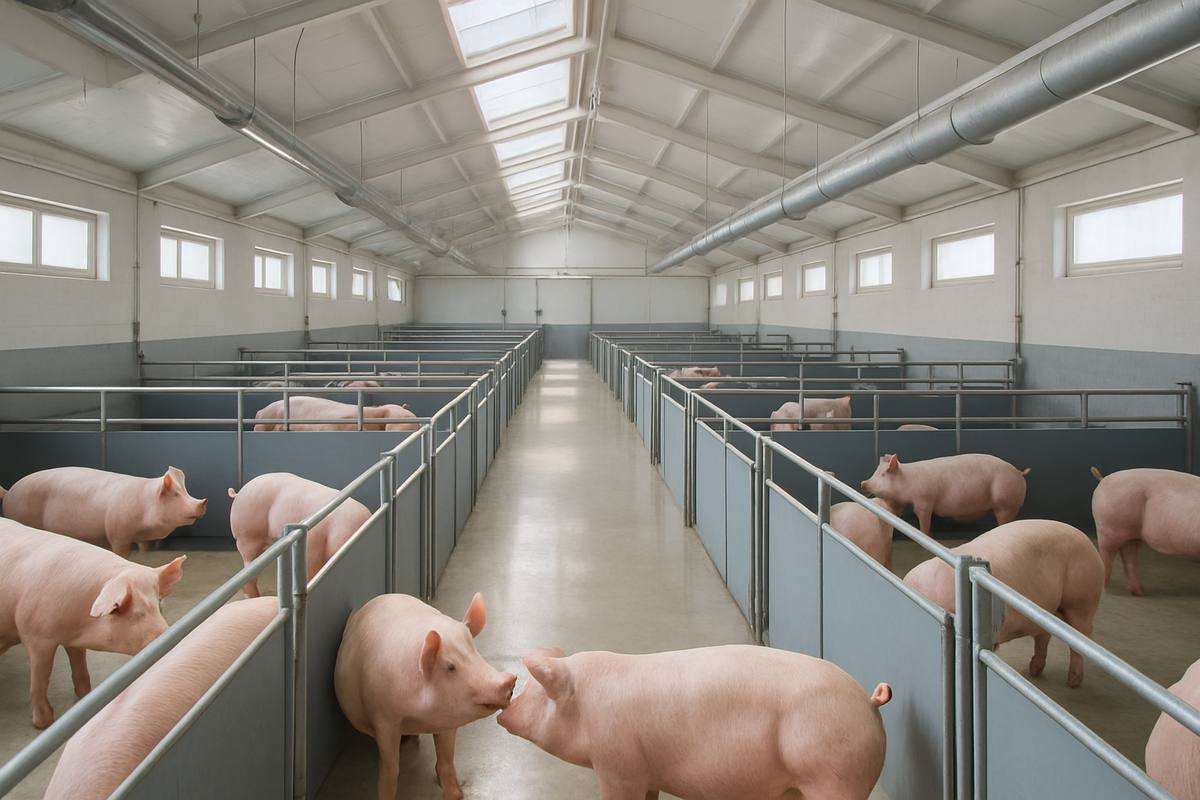
A clean, well-ventilated barn — the goal that odor control supports.
Where barn ammonia comes from
Ammonia (NH₃) is released when microbes break down nitrogen compounds in manure and litter — especially uric acid in poultry droppings. Warm, wet, poorly ventilated litter accelerates it. Beyond the smell, elevated ammonia damages the respiratory tract lining, suppresses appetite and growth, and raises foot-pad and welfare problems. It is also a workplace air-quality issue for staff.
Why ammonia matters
- Bird performance — high NH₃ depresses intake, growth and feed conversion.
- Welfare & health — airway irritation, foot-pad dermatitis, eye problems.
- Worker comfort & compliance — air-quality limits in many facilities.
- Neighbor relations — odor complaints around farms and food facilities.
The usual tools — and their limits
Ventilation and dry litter are the foundation, but they have limits in hot, humid or high-density conditions. Litter amendments (acidifiers) work but can be corrosive and short-lived. Harsh chemical deodorizers (chlorine, ozone) raise their own safety and material-compatibility concerns. Producers increasingly want something effective that is also non-toxic and gentle on animals, people and equipment.
How nano zinc oxide helps
ZnoNova Super Zinc is a food-grade, pH-neutral nano zinc oxide concentrate. Applied in the environment, the zinc chemistry binds and reduces odor compounds such as ammonia, and its antibacterial action curbs the microbes that generate odor in the first place. It is independently tested:
| Test | Method | Result | Report |
|---|---|---|---|
| Ammonia deodorization | Intertek, FTTS-FA-018 | 96% | TWNC01003337 |
| Antibacterial (E. coli) | SGS | >99.999% | FA/2017/C1435A-01 |
| Heavy metals (Pb/Cd/Hg) | SGS food lab | Not detected | ABA24404369 |
How to use it for odor control
- Dilute the concentrate (heavily — it is a 60,000 ppm product) and apply as a fine spray or fog over litter and surfaces.
- Reapply on a schedule matched to stocking density, litter moisture and temperature.
- Combine with good ventilation and litter management — odor control is a complement, not a substitute, for the basics.
- Dual benefit — the same product used in drinking water for zinc nutrition also serves environmental odor control.
Beyond poultry
The same approach applies to pig barns, livestock housing, and food-handling and public facilities where ammonia and organic odors are a problem — anywhere a non-toxic, food-grade deodorizer is preferred over harsh chemistry.
Cleaner air, calmer barns
Request a free sample, the Intertek and SGS reports, and an application guide for your facility.
Request a free sample →Request a sample & technical data
Tell us your application — a real person replies within 1–2 business days.
Frequently asked questions
How do you reduce ammonia in a poultry house?
Start with ventilation and dry litter, then add an odor-control agent. A food-grade nano zinc oxide concentrate (Intertek-tested at 96% ammonia deodorization) binds and reduces ammonia and curbs odor-causing microbes, applied as a diluted spray over litter and surfaces.
Is the deodorizer safe around animals?
Super Zinc is food-grade and pH-neutral, with lead, cadmium and mercury not detected in SGS food-lab testing — gentler than chlorine or ozone for use around animals, people and equipment.
Can the same product be used in feed/water and for odor control?
Yes. It is used in drinking water or feed for zinc nutrition, and diluted for environmental spraying to control odor — one product, two roles.
※ General technical information on barn odor control. ZnoNova Super Zinc is a zinc nutritional / antibacterial and deodorizing product, not a veterinary drug, and makes no disease-prevention or treatment claim. Comply with local biocide, feed and food regulations for your market.