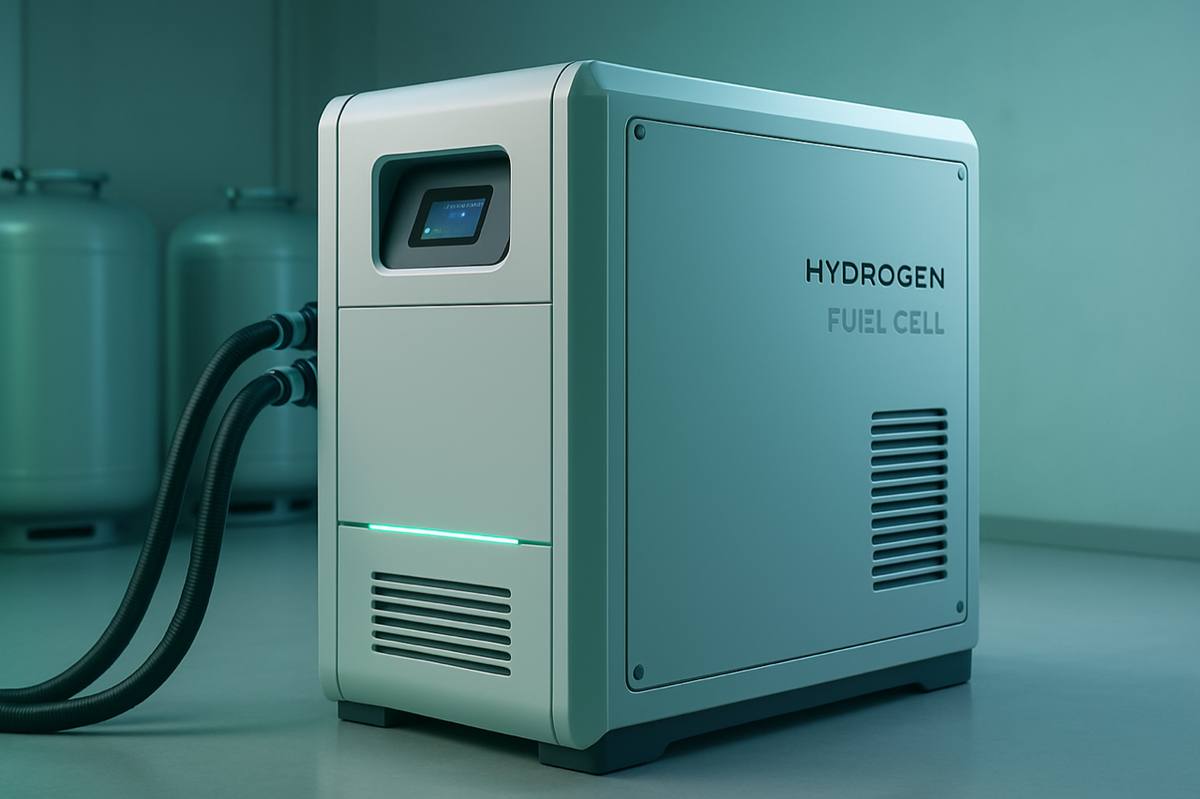
By integrating Pd-decorated multi-walled carbon nanotubes into a magnesium alloy, the material reaches 6.15 wt% reversible hydrogen capacity — 3.7× that of mainstream rare-earth (AB5) alloys. Faster uptake, lower desorption energy, stable cycling, and safe — without high-pressure tanks.
Pd-decorated MWCNT × AZ61 Mg Alloy · 6.15 wt% reversible H₂ · +58% kinetics · −31% desorption energy
To move from producing hydrogen to using it, storage is the hurdle nobody can skip — and that is exactly where PdMWCNT-AZ61 steps in.
Measured on AZ61 Mg alloy + 3 wt% Pd/MWCNT composite (375°C, 3 MPa H₂, Sieverts method).
When a customer says "our existing rare-earth alloy is good enough" — show them this table.
| Metric | Mainstream (AB5 rare-earth) | PdMWCNT-AZ61 (this material) | Customer benefit |
|---|---|---|---|
| H₂ capacity | 1.5–1.65 wt% (at limit) | 6.15 wt% | Double-and-double the range at the same weight |
| System weight | Very heavy, hard to move | Substantially lighter | Enters mobile: ships / drones / heavy trucks |
| Operating env. | Room temp, but bulky | Mid-high temp (pairs with waste heat) | Recovers existing waste heat — no extra power |
| Uptake kinetics | Standard | +58% | Faster refuelling, shorter turnaround |
| Cyclability | — | >95% @ 20 cycles | Dependable service life |
~5nm Pd nanoparticles anchored on the nanotube walls; ball-milling refines the alloy grains from ~50μm to 18.7nm. Catalysis, structure and interface work together to build multi-scale hydrogen transport channels.
Pd nanoparticles act as H₂ dissociation centres, splitting molecules into atoms and markedly lowering the dissociation barrier.
Carbon nanotubes drive intense grain refinement and high dislocation density; grain boundaries and dislocations become fast diffusion "highways" for H atoms.
The Pd/MWCNT/Mg interface offers low-barrier nucleation sites, so MgH₂ nucleates preferentially and avoids a dense hydride layer blocking further reaction.
Especially suited to teams with high-temperature waste-heat environments and lightweight, high-capacity requirements.


High-efficiency storage integrated with ~600°C system waste heat.
Hydrogen ships, drones and rail — where lightweight, high-capacity storage is essential.
Steel and chemical plants turning 200–500°C waste heat into stored energy value.
Low-pressure, endothermic release, non-explosive — the safest solid-state route.
Performance is backed by rigorous research and third-party testing, ready to withstand your engineering team's due diligence.
Performance derives from a peer-reviewed study (academic–industry collaboration, 42 references) on the hierarchical synergy of Pd-decorated MWCNTs enhancing hydrogen storage in AZ61 Mg alloy.
Storage kinetics measured by the Sieverts method; microstructure characterised by XRD / SEM / TEM / XPS; JMAK fitting confirms 3-D diffusion control (Avrami n = 1.48).
Related nano precious-metal materials are verified by independent ICP analysis (e.g., nano-Pt measured at 99.2% purity) — traceable and reproducible quality.
Guangzhou ZnoNova Technology Development Co., Ltd. focuses on the commercialisation and application of advanced hydrogen-energy materials — bringing breakthrough storage materials from the lab to real demand across the hydrogen value chain.
Centred on PdMWCNT-AZ61 solid-state hydrogen storage material, we serve fuel cells, hydrogen vehicles and industrial waste-heat storage with end-to-end support — from material and formulation to application solutions.
Serving China — the world's largest hydrogen market (~30% of global demand, targeting one million fuel-cell vehicles by 2030) — we aim to be the most dependable partner on the materials side.
Commercialising advancedGreen hydrogen has two catalyst-critical steps — making it and storing it. We supply advanced materials for both, so you can source from one partner.
The hydrogen-evolution (cathode) catalyst for water/PEM electrolysis. Engineered for high platinum utilization — less platinum per unit of capacity. Samples & specs on request. Learn more →
Peer-reviewed across two journals (J. Energy Storage 2026; Fuel 2026): a Pd/MWCNT-modified AZ31 alloy reaches 6.89 wt% reversible storage, +58% capacity at 325 °C, with a ~26% lower desorption barrier, DFT-validated. Learn more →
Tell us your application and we'll reply within 1–2 business days with the relevant data and a sample plan.
PdMWCNT-AZ61 integrates palladium-decorated multi-walled carbon nanotubes into a magnesium (AZ61) alloy, giving 6.15 wt% reversible hydrogen capacity — about 3.7x that of mainstream rare-earth AB5 alloys — with faster kinetics, lower desorption energy and stable cycling, without high-pressure tanks.
6.15 wt% reversible capacity (about 90% of theoretical), +58% faster kinetics, -31% lower desorption energy and >95% retention after 20 cycles, based on peer-reviewed research.
Fuel cells (SOFC / PEMFC), hydrogen vehicles (ships, drones, vehicles), industrial waste-heat storage and distributed / backup power - best for users with high-temperature or waste heat available.
Yes. ZnoNova supplies high-purity nano precious-metal and functional powders - nano platinum (99.2% ICP-verified), palladium catalysts and water-dispersible nano zinc oxide - for catalysis, fuel cells and coatings.
Yes - free evaluation samples, the full datasheet, SDS and CoA are available to qualified buyers under NDA.